
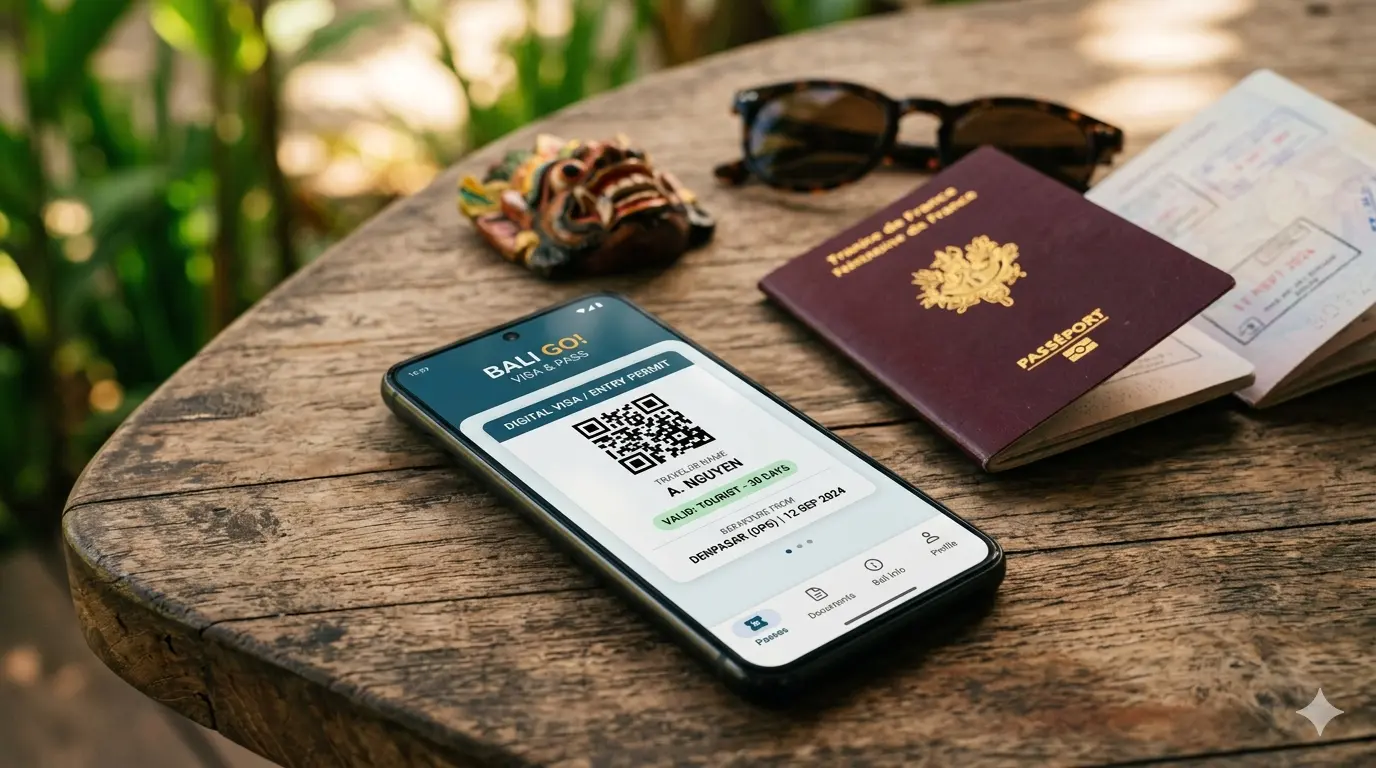
🛂 E-VISA & INSURANCE GUIDE
Indonesia E-Visa Insurance Requirements: Complete 2026 Guide
Indonesia’s e-Visa system has evolved significantly. The e-VOA (electronic Visa on Arrival, code B1), C1 tourist visa, the new All Indonesia app, the Bali Tourism Levy — there’s more digital pre-clearance than ever, and the question of insurance fits into all of it. Travel insurance isn’t strictly mandatory for the e-VOA, but the practical landscape (medical costs, evacuation realities, recent regulatory tightening) makes it a near-essential rather than optional. This guide breaks down exactly what’s required, what’s recommended, and what plans actually fit each visa type.
📋 Response within 24 hours — no obligation
· Verified with imigrasi.go.id and Indonesian immigration regulations
⚡ QUICK ANSWER
Insurance recommendations by Indonesia e-Visa type:
🟢 e-VOA (B1) — up to 60 days max
Insurance not legally mandatory but strongly recommended. SafetyWing Essential at ~$63/4 weeks or Genki Traveler from ~€60/month (varies by age). Total: ~$30–$110 for typical short visit.
🟡 C1 Tourist Visa (formerly B211A) — up to 180 days
Insurance often required by visa agent for sponsorship. Genki Traveler from ~€60/month (varies by age), SafetyWing Complete at $164/month, or IMG Patriot Travel for trip-based. See B211A/C1 guide →
🔴 KITAS / Long-term stay
Insurance is a different category — expat health insurance, not travel insurance. Genki Traveler or IMG Global Medical Insurance. See KITAS guide →
Need a personalized recommendation? Tell us about your visa →
2026 LANDSCAPE
Indonesia’s E-Visa System in 2026: What’s Changed
Indonesia restructured its visa system significantly between 2023 and 2026. The transition from paper to digital is largely complete, and several new requirements have layered on top. If your last visit to Indonesia was before 2024, the entry process now looks different. Here’s the current landscape.
Three categories now exist for short-term visitors
CATEGORY 1 — VISA EXEMPTION🟢 Visa-free entry (limited to ~13 nationalities)Citizens of ASEAN member countries plus a small group of others (Brunei, Cambodia, Laos, Malaysia, Myanmar, Philippines, Singapore, Thailand, Vietnam, Timor-Leste, Brazil, Colombia, Hong Kong SAR, Suriname, Türkiye, Peru) can enter Indonesia visa-free for up to 30 days. Cannot be extended, cannot be converted to KITAS. If you’ll stay over 30 days, choose e-VOA or C1 instead.CATEGORY 2 — E-VOA / VOA🛂 Visa on Arrival or e-VOA (~97 nationalities eligible)The most common visa for Western tourists. Code B1. IDR 500,000 (~$35 USD). Valid 30 days, extendable once for another 30 days (total 60 days). Available either online before travel (e-VOA — recommended) or at airport on arrival (VOA — works but slower). The e-VOA lets you skip queues and use automated e-gates at major airports.CATEGORY 3 — C1 / D1 PRE-ARRANGED🌴 C1 Tourist Visa (formerly B211A)For longer stays (60+ days, up to 180 days total via extensions). Pre-arranged before travel. Sponsor required (typically a visa agent). Bank statement showing ~$2,000 USD minimum. Processing typically 5–10 working days. Full C1/B211A guide →
New 2026 requirements that apply to everyone
📱 All Indonesia app — mandatory digital arrival cardReplaces the previous SATUSEHAT system. Combines customs declaration, health declaration, and immigration registration into a single digital form. Required for all international arrivals regardless of visa type. Complete online before travel ideally; can be done at airport but causes delays.💵 Bali Tourism Levy — IDR 150,000 (~$10 USD)Effective February 14, 2024. Applies to all international arrivals to Bali specifically (not other Indonesian destinations). Separate from the visa fee. Payable online via the Love Bali portal or on arrival. One-time per visit, not per day.📄 In-person extension requirement (June 2025+)Per Circular Letter No. IMI-417.GR.01.01/2025, all foreigners must visit the local immigration office in person to extend any visa or stay permit. Visa agents can help prepare paperwork but the visa holder must appear in person for biometrics. Allow extra time for extensions.
📌 The 2026 entry checklist
For most Western tourists arriving in Bali in 2026: (1) e-VOA or VOA, (2) All Indonesia digital arrival card, (3) Bali Tourism Levy paid, (4) passport valid 6+ months with 2+ blank pages, (5) return/onward ticket, (6) travel insurance (not legally mandatory but strongly recommended). The digital pre-clearance approach saves time at the airport but requires more preparation before flight.
VISA TYPES
Indonesia E-Visa Types in Detail
Multiple e-visa types exist for different purposes. Understanding which one applies to your situation is the first step in figuring out insurance requirements.
B1 — E-VOA (TOURISM)🏖️ e-VOA Tourism (most common)Purpose: Tourism, transit, social visits, attending meetings/conferences (no paid work). Duration: 30 days, extendable once for 30 more (total 60). Cost: IDR 500,000 (~$35 USD). Application: Online via evisa.imigrasi.go.id, processing 1–3 business days. Insurance: Not legally mandatory but strongly recommended. Best plans: SafetyWing Essential (~$63/4 weeks), Genki Traveler (from ~€60/month, varies by age), IMG Patriot Travel (trip-based).B2 — E-VOA (BUSINESS)💼 e-VOA BusinessPurpose: Business meetings, conferences, exhibitions, training (no paid work). Same operational rules as B1 — 30 days extendable once. Cost: IDR 500,000 (~$35 USD). Insurance: Same recommendations as B1 tourism. Most plans don’t distinguish business from tourism for short visits. Most business travelers benefit from corporate travel insurance through their employer; verify it covers Indonesia.C1 — TOURIST VISIT VISA🌴 C1 Tourist Visa (formerly B211A)Purpose: Longer tourism stays. Duration: 60 days initially + up to 2 extensions of 60 days each = 180 days total. Cost: ~$100–$200 USD plus visa agent fees ($50–$150). Bank statement requirement: ~$2,000 USD minimum. Insurance: Often required by visa agent or embassy. The standard long-tourism visa for backpackers, digital nomads on tourist track, retirees scoping out Indonesia. See B211A/C1 detailed guide →
C2 — BUSINESS VISIT VISA🤝 C2 Business VisaPurpose: Long-term business activities (still no paid local work). Duration: 60 days + extensions. Sponsor: Indonesian company or agent. Less common than C1 but appropriate for extended business engagements. Insurance: Same as C1.D1 — MULTIPLE-ENTRY VISIT🔄 D1 Multiple-Entry Tourist VisaPurpose: Multiple tourism visits over a period. Duration: Valid 1 year or more, with each entry allowing up to 60 days. Suitable for travelers entering and leaving Indonesia repeatedly during the year. Insurance: Annual travel insurance plans appropriate (Genki Traveler or IMG Global Medical Insurance trip-based).E-CATEGORY — KITAS / KITAP🏠 KITAS / KITAP (long-term residency)Different category entirely. KITAS is for residents (work, investor, retirement, family), validity 1–5 years. Insurance is expat health insurance, not travel insurance — different products. BPJS Kesehatan becomes mandatory after 6 months. See dedicated guide →
Visa-free entry (limited)
Citizens of approximately 13 nationalities can enter Indonesia visa-free for up to 30 days. The list includes ASEAN members (Brunei, Cambodia, Laos, Malaysia, Myanmar, Philippines, Singapore, Thailand, Vietnam, Timor-Leste) plus a small group of others (Brazil, Colombia, Hong Kong SAR, Suriname, Türkiye, Peru). Visa-free entry cannot be extended and cannot be converted to KITAS — if you stay longer than 30 days, you must leave Indonesia. Insurance is not legally required but strongly recommended for the same reasons as e-VOA holders.
THE LEGAL QUESTION
Is Travel Insurance Legally Mandatory for Indonesia E-Visa?
The honest answer is nuanced. Indonesia’s official immigration regulations don’t currently mandate travel insurance for tourist e-visa holders. But there are several practical layers where insurance becomes effectively required, and at least one proposed regulation that would change the legal status entirely.
What’s currently true
✅ For e-VOA (B1) — not legally mandatoryThe official e-VOA application doesn’t require proof of insurance. Indonesian immigration agents at airports don’t routinely ask for insurance documentation. Practically, you can arrive on e-VOA with no insurance and still enter Indonesia.⚠️ For C1/D1 visas — often required by visa agentsVisa agents who sponsor C1/D1 applications frequently require proof of travel insurance as part of their sponsorship process. This isn’t a government requirement but an agent-level requirement. Without insurance documentation, many agents won’t proceed with the application.⚠️ For embassy-issued visas — sometimes requiredSome Indonesian embassies abroad request travel insurance documentation for certain visa categories. Requirements vary by embassy and applicant nationality. Verify with your local Indonesian embassy if applying for a non-standard visa.📋 Proposed regulation — under considerationA broader provincial regulation has been proposed that would extend financial screening (including insurance verification) to all tourist categories including e-VOA. As of April 2026, this remains a draft proposal subject to legislative approval and national government sign-off. Travelers should monitor the All Indonesia portal for updates.
⚠️ The “not mandatory” trap
“Not mandatory” doesn’t mean “not necessary.” Indonesia’s medical infrastructure for foreigners (BIMC, Siloam international wings) requires upfront payment for treatment. Without insurance, you pay full retail rates — typically $200–$1,500 for a moderate ER visit, $5,000–$25,000 for surgical events, $50,000–$200,000+ for Singapore evacuation. The legal absence of mandatory requirement doesn’t change the practical financial reality.
E-VOA PROCESS
e-VOA Application Process Step-by-Step
The e-VOA process takes 15–30 minutes online and saves significant time at the airport. Here’s how it actually works.
STEP 1 — VERIFY ELIGIBILITYCheck if your nationality qualifiesApproximately 97 nationalities are eligible for e-VOA. Verify on evisa.imigrasi.go.id (the official Indonesian e-Visa portal). The list updates periodically. If your nationality isn’t eligible, you’ll need C1 or another pre-arranged visa instead.STEP 2 — PREPARE DOCUMENTSGather required documentationRequired: passport valid 6+ months from entry date with 2+ blank pages, return or onward ticket, recent passport-style photo (specific format requirements), credit/debit card for payment. Recommended: travel insurance documentation (in case asked, though not currently required).STEP 3 — APPLY ONLINESubmit application at evisa.imigrasi.go.idUse only the official portal — many scam websites mimic it. Application form takes 15–30 minutes. Pay IDR 500,000 (~$35 USD) by credit/debit card. Up to 5 applicants per application (useful for families). Submit at least 48 hours before travel — recommended timeline.STEP 4 — RECEIVE APPROVALe-VOA delivered via emailApproval typically arrives within 1–3 business days; sometimes faster. e-VOA delivered as PDF document linked to your passport. Print or save digitally — the QR code on the document is what immigration scans on arrival.STEP 5 — COMPLETE ALL INDONESIA APPDigital arrival card before flightAll Indonesia digital arrival card (replaces SATUSEHAT) is now mandatory for all international arrivals. Combines customs, health, and immigration declarations. Complete online before flight to skip airport delays. QR code generated for arrival.STEP 6 — PAY BALI TOURISM LEVY (BALI ONLY)IDR 150,000 if arriving in BaliIf your destination is Bali, pay the Tourism Levy of IDR 150,000 (~$10 USD) via the Love Bali portal before arrival, or on arrival at the airport. One-time per visit. Not required for arrivals at other Indonesian destinations.STEP 7 — ARRIVE AT INDONESIAN AIRPORTUse automated e-gatesWith e-VOA, you can use automated immigration e-gates at major airports (Ngurah Rai Bali DPS, Soekarno-Hatta Jakarta CGK, others), bypassing manual immigration counters. Significantly faster than VOA-on-arrival queues. Have e-VOA QR code, All Indonesia QR code, and passport ready.
📌 Total entry preparation timeline
Recommended timeline: e-VOA application 1–2 weeks before flight (allows margin for any rejection requiring reapplication). All Indonesia digital arrival card 3 days before flight. Bali Tourism Levy at any point before arrival. Travel insurance ideally arranged before booking flights. Note: SafetyWing Essential does not cover trip cancellation — choose a plan with cancellation cover if this matters to you. The whole digital pre-clearance approach takes about 1 hour total spread over the weeks before travel.
DIGITAL ARRIVAL
All Indonesia App: The New Mandatory Digital Arrival Card
The All Indonesia app (also accessed via the All Indonesia web portal) replaces the previous SATUSEHAT system used during 2022–2025. As of 2026, it’s mandatory for all international arrivals. Here’s what you need to know.
What it covers
A single digital form that combines: immigration registration (basic biographical and trip details), customs declaration (items being brought into the country), health declaration (any current illness/contagious disease), accommodation registration (where you’re staying in Indonesia). The form generates a QR code that immigration officers scan on arrival.
When to complete it
Strongly recommended to complete online 3 days before arrival. Available 24/7 via the All Indonesia portal. Can be completed at the airport on arrival but causes delays — manual processing lines are notably longer than the digital pre-cleared autogate lines.
Important fields to prepare
- Hotel/accommodation address for first night — book before completing the form
- Flight details — flight number, arrival date, return/onward flight
- Currency declaration — required if carrying over IDR 100,000,000 (~$6,500 USD) or equivalent
- Items declaration — electronics over $500 USD, alcohol over 1L, tobacco over 200 cigarettes, currency over threshold
- Health declaration — current symptoms, recent fever, recent contact with infectious disease patients
📌 IMEI registration (separate but related)
If you’ll stay in Indonesia for more than 90 days and want to use a local SIM card, you must register your phone’s IMEI through the All Indonesia portal. Phones valued under $500 USD: no import tax. Above that, import tax may apply. Alternative: use a Tourist SIM for up to 90 days at any Telkomsel Grapari office without full IMEI registration.
BALI LEVY
Bali Tourism Levy: What It Is, How to Pay
Effective February 14, 2024, all international arrivals to Bali pay an additional Tourism Levy. This is separate from the visa fee and the All Indonesia digital arrival card. Here’s how it works.
Key facts
- Amount: IDR 150,000 (~$10 USD / €9 EUR / AUD 14)
- Frequency: One-time per visit, not per day
- Coverage: Bali only — not other Indonesian destinations
- Who pays: All international arrivals regardless of nationality, age, or visa type
- Exemptions: Limited (specific cases like Indonesian citizens, transit passengers)
How to pay
📱 Online before arrival (recommended)Via the official Love Bali portal (lovebali.baliprov.go.id). Pay by credit/debit card. Receive QR code as confirmation. Faster airport processing.💳 At the airport on arrivalAvailable at Ngurah Rai Airport’s dedicated Bali Tourism Levy desk. Causes delay — recommend pre-payment for time savings.⚠️ Beware of unofficial websitesSeveral third-party websites offer to handle the Bali Tourism Levy for higher fees. Use only the official Love Bali portal for legitimate payment.
📌 What the levy funds
The Bali Tourism Levy funds local environmental protection programs, cultural preservation initiatives, and tourism infrastructure improvements in Bali. The Indonesian government positions it as a sustainability measure rather than pure revenue generation. Other Indonesian provinces have not introduced similar levies as of April 2026.
INSURANCE REQUIREMENTS
What Your E-Visa Insurance Should Actually Cover
Even though insurance isn’t legally mandatory for most Indonesia e-visas, the insurance you choose should cover what actually happens to e-visa visitors in Indonesia. Here’s what matters.
✅ Minimum medical coverage: $250K, ideally $500K+Indonesian foreigner-grade hospital costs add up quickly: $200–$1,500 for ER visits, $5,000–$25,000 for surgery, more for ICU and complex care. A $250K limit handles most events; $500K provides better margin. Limits below this start showing gaps.✅ Singapore evacuation cover: at least $100KSevere medical events in Indonesia frequently require Singapore evacuation. Air ambulance + Mount Elizabeth ICU + complex surgery routinely costs $80K–$200K+. Plans with $25K–$50K evacuation caps are inadequate. See evacuation guide →✅ Scooter coverage if you’ll rideScooter accidents are statistically the leading cause of serious injury for tourists in Bali. Most generic travel insurance excludes motorbike accidents OR requires a valid motorcycle license + IDP. Genki Traveler is the rare option that covers 125cc scooters without requiring a motorcycle license. See scooter insurance details →✅ Activities you’ll actually doVerify coverage for: surfing, snorkeling, scuba diving (often excluded standard), volcano hikes, water sports, monkey forest visits (rabies risk). Most generic plans cover standard tourism but exclude what tourists actually do in Bali.✅ Trip duration matches visa durationFor e-VOA up to 60 days, verify the policy covers up to 60 days. For C1 up to 180 days, verify policy covers extensions. Monthly subscriptions (Genki, SafetyWing) auto-continue regardless of duration; trip-based plans require explicit duration matching.✅ 24/7 medical assistance with Indonesia networkWhen something happens, you call the insurer’s 24/7 line. They issue Guarantee of Payment to BIMC or Siloam (so you don’t pay upfront). Plans without active Indonesia networks make claims much more difficult.
⚠️ Watch out for “free” credit card travel insurance
Some premium credit cards include travel insurance benefits. They’re often inadequate for Indonesia: low evacuation caps ($25K–$50K), restrictive activity coverage (no scooters, no diving), short trip durations (60–90 days max), complex claims processes. Verify what your credit card actually covers before relying on it. Most travelers benefit from a dedicated travel insurance policy in addition.
BEST PLANS
Best Insurance Plans by Indonesia Visa Type
The right plan depends on your visa type, trip length, age, and activity profile. Here’s the breakdown for each scenario.
⭐ FOR E-VOA WITH SCOOTER USEGenki Traveler — from ~€60/month (varies by age)€1M medical including evacuation, covers 125cc scooters without requiring motorcycle license, covers most adventure activities (surf, recreational diving up to 18m), monthly cancel-anytime subscription. The most well-rounded option for typical Bali tourists who’ll likely ride scooters. Total for 60-day e-VOA stay: ~€100–€110.CHEAPEST REAL OPTION FOR E-VOASafetyWing Essential — ~$63/4 weeks$250K medical limit. The cheapest option that’s actually real insurance (not just marketing). Monthly subscription. Important caveat: requires valid motorcycle license + IDP for scooter coverage to apply. Suitable for non-scooter, non-diving tourists. Total for 60-day stay: ~$110.UPGRADED FOR LONGER STAYSSafetyWing Complete — $164/month$1.5M medical limit, $100K specific evacuation, includes routine and preventive care. Better suited to C1 long-stay visa holders or e-VOA visitors wanting comprehensive cover. Monthly cancel-anytime. Requires motorcycle license for scooter coverage.FOR FAMILIES & SENIORSIMG Patriot Travel — Trip-based pricingUp to $1M medical, strong evacuation cover, accepts ages 0–89, family rates available, declaration option for pre-existing conditions. Trip-based pricing matches defined-end e-VOA stays. Particularly suitable for families with children/grandparents and seniors. See family guide → · See senior guide →
Quick reference table
📊 e-VOA solo backpacker (will ride scooter)Genki Traveler from ~€60/month (age-dependent) — €1M medical, scooter covered with conditions, monthly subscription📊 e-VOA family with childrenIMG Patriot Travel family rates — strong evacuation, ages 0+, declaration option📊 e-VOA seniors (60+)IMG Patriot Travel — accepts up to age 89, pre-existing condition options📊 e-VOA budget tourist (no scooter)SafetyWing Essential ~$63/4 weeks — basic but real coverage📊 C1 long-stay (60–180 days)Genki Traveler from ~€60/month (varies by age) or SafetyWing Complete $164/month📊 Multiple-entry D1 (1+ year)Genki Traveler or IMG Global Medical Insurance annual plan📊 KITAS / Long-term residentDifferent category — expat health insurance. See KITAS guide →
WHY IT MATTERS
Why Insurance Is “Strongly Recommended” Even When Not Mandatory
Indonesia’s recommendation language (“strongly recommended” rather than “mandatory”) doesn’t reflect risk levels — it reflects regulatory choice. The actual financial exposure for uninsured visitors is substantial. Here are the specific reasons even short-stay e-VOA visitors should have coverage.
💰 Foreigner-grade hospital costs are paid upfrontBIMC and Siloam international wings — the hospitals foreigners actually use — require payment before treatment. ER visit: $200–$1,500. Surgery: $5,000–$25,000. ICU: $1,000–$3,000/day. Without insurance, these costs come out of pocket immediately.✈️ Singapore evacuation requires upfront 50% depositSevere events requiring evacuation involve air ambulance companies that demand 50% of estimated cost ($50K–$60K) before lift-off. Family wires this internationally under stress while patient waits in Bali ICU. With insurance, the insurer handles all coordination and payment.🛵 Scooter accidents are common and excluded by defaultScooter accidents are the single most common serious incident for foreign tourists in Bali. Most travel insurance excludes motorbike accidents unless you have a valid motorcycle license + IDP. Most tourists don’t. Combined with the high accident rate, this creates significant exposure for tourists who rent scooters and don’t have appropriate coverage.🏝️ Multi-island travel adds evacuation distanceTrips to Komodo, Raja Ampat, Mentawai, Flores or other remote Indonesian destinations create longer evacuation distances and times. Evacuation coverage scales with distance — events on remote islands easily exceed $100K to bring patient back to Bali, then potentially Singapore.📅 Pending regulatory tighteningIndonesia is considering extending mandatory insurance and financial verification to all visa categories including e-VOA. While not currently in force, the trajectory is toward stricter requirements. Travelers building long-term familiarity with Indonesia benefit from establishing insurance habits early.
📌 The math for e-VOA visitors
Genki Traveler from ~€60/month for a 60-day e-VOA stay: ~€100. SafetyWing Essential at ~$63/4 weeks: ~$110. A single moderate event (food poisoning ER visit, scooter accident, dengue admission) costs $500–$5,000 — already paying for the policy. A serious event ($25K+) repays the premium 100x+. The expected value of having insurance is overwhelmingly positive even at low probability.
VISA EXTENSION
Visa Extension & Insurance Continuity
e-VOA can be extended once for 30 days (total 60 days). C1 can be extended twice for 60 days each (total 180 days). Insurance must continue uninterrupted across the visa extension. Here’s how it actually works.
Insurance during e-VOA extension
If you started with monthly subscription insurance (Genki Traveler, SafetyWing), it auto-continues regardless of visa extension. Just continue paying monthly premiums. If you started with trip-based insurance for the initial 30 days, you must extend the policy when extending the visa — typically requires re-purchasing for the additional 30 days.
In-person extension requirement (June 2025+)
Per Circular Letter No. IMI-417.GR.01.01/2025, all foreigners must visit the local immigration office in person to extend any visa or stay permit. Visa agents can prepare paperwork and accompany you, but the visa holder must appear for biometrics. Plan for 2–3 visits typically: documentation submission, biometrics, passport collection. Allow 7–14 days for the process.
Avoid coverage gaps
The most common insurance error during visa extension is letting coverage expire before completing the extension. If your trip-based insurance covered exactly 30 days and you extend the visa, ensure new insurance starts before the previous policy ends. Even one day of gap means medical events that day are uninsured.
📌 Why monthly subscriptions help with extensions
Monthly subscription insurance (Genki Traveler, SafetyWing) is the simplest approach for travelers who might extend their visa. It auto-continues without you needing to take any action. Trip-based insurance requires explicit extension before the previous policy expires, creating administrative friction during what’s already a busy time (immigration office visits, document preparation).
COMMON MISTAKES
5 Common Indonesia E-Visa Insurance Mistakes
These are the recurring problems we see e-visa holders face. Each is preventable with proper preparation.
MISTAKE #1 — MOST COMMON“Insurance isn’t required so I don’t need it”Indonesia’s e-VOA doesn’t legally require insurance, so many travelers skip it. The legal absence of requirement doesn’t change the financial reality — Indonesian foreigner-grade hospitals require upfront payment regardless of insurance status. Skipping the $30–$110 premium for typical short stays risks $5K–$200K+ in uncovered medical costs. The math doesn’t favor self-insurance even at low probability.MISTAKE #2Buying scooter-excluding insurance, then renting scooters anywayMost generic travel insurance excludes motorbike accidents OR requires a motorcycle license. Most Bali tourists rent scooters at some point. The combination is the worst of both worlds: paid premium but not covered for the most likely serious incident. Either choose Genki Traveler (covers 125cc without license) or commit firmly to never riding scooters.MISTAKE #3Relying on credit card “free” travel insurancePremium credit card travel insurance benefits often have low evacuation caps ($25K–$50K), restrictive activity coverage, short trip durations (60–90 days max), and complex claims processes. Verify what your credit card actually covers before relying on it. Most travelers benefit from a dedicated policy in addition.MISTAKE #4Letting coverage lapse during visa extensionTrip-based insurance for initial 30 days expires before the visa extension is processed. Even one day of gap means events that day are uninsured. Use monthly subscription insurance (auto-continues) or explicitly extend trip-based insurance before previous policy expires.MISTAKE #5Not calling insurer’s 24/7 line first when something happensWhen something happens, the first call should be to your insurer’s 24/7 medical assistance line — before going to a hospital. They issue Guarantee of Payment to BIMC or Siloam (so you don’t pay upfront), assign a case number, and direct you to the right facility. Going to the hospital first without calling insurance often means paying out of pocket and fighting for reimbursement later.
FAQ
Indonesia E-Visa Insurance: FAQ
Is travel insurance mandatory for the Indonesia e-VOA?No, travel insurance is not legally mandatory for the Indonesia e-VOA (B1). Immigration agents don’t routinely ask for insurance documentation. However, it’s strongly recommended given the upfront-payment nature of Indonesian foreigner-grade hospitals and the high cost of evacuation events. The “not required” label doesn’t change the financial reality of being uninsured during a medical event.What about the C1 tourist visa — is insurance required there?Often yes, by the visa agent rather than the government. Most Indonesian visa agents handling C1/B211A applications require proof of travel insurance as part of their sponsorship process. Without insurance documentation, many agents won’t proceed. The requirement is agent-level, not legally mandated, but practically unavoidable.How long does e-VOA application take?Typically 1–3 business days, sometimes faster. The official e-VOA portal recommends submitting at least 48 hours before your flight. Allow extra time if your application requires manual review. If rejected (uncommon, usually due to photo or passport issues), you can reapply immediately after fixing the issue or get traditional VOA at the airport.Can I extend the e-VOA from inside Indonesia?Yes, the e-VOA can be extended once for 30 additional days, bringing total stay to 60 days. Per June 2025 regulation, you must visit the local immigration office in person for biometrics during the extension process. Visa agents can prepare paperwork but the visa holder must appear personally. Allow 7–14 days for the process.What’s the difference between e-VOA and visa-free entry?Visa-free entry (~13 nationalities) allows 30 days at no cost but cannot be extended or converted. e-VOA (~97 nationalities) costs IDR 500,000 (~$35) but can be extended once for 30 days (total 60). Visa-free is essentially short-trip-only; e-VOA accommodates longer stays. Some travelers use the wrong entry type by mistake — verify your nationality’s eligibility before traveling.Do I need to pay the Bali Tourism Levy if I’m not staying in Bali?No. The Bali Tourism Levy (IDR 150,000) applies only to international arrivals to Bali specifically. If you arrive at Jakarta (Soekarno-Hatta) or other Indonesian destinations, you don’t pay this levy. Other Indonesian provinces have not introduced similar levies as of April 2026.What happens if I overstay my e-VOA?Overstay penalties apply: IDR 1,000,000 (~$65 USD) per day overstayed. Long overstays can result in detention, deportation, and bans on future travel to Indonesia. Insurance typically doesn’t cover overstay-related costs or legal issues. If your trip extends unexpectedly, extend your visa before it expires rather than overstaying.Can I work in Indonesia on e-VOA?No. e-VOA is strictly for tourism, transit, social visits, and short-term business activities (meetings, conferences). Paid work for Indonesian employers requires a KITAS (work permit). Working illegally on e-VOA can result in deportation and bans. Remote work for non-Indonesian employers/clients is technically not permitted on tourist e-VOA either, though enforcement is limited; the proper route is the E33G remote worker KITAS.Can I convert e-VOA to KITAS?Yes, the e-VOA can be converted to KITAS through a Bridging Visa process. Requires proper sponsor (employer for work KITAS, agent for retirement, etc.). The process takes time and needs to start while your e-VOA is still valid. Insurance must continue uninterrupted across the conversion. See KITAS guide for full details →What’s the absolute minimum insurance I should have for e-VOA?Minimum acceptable: $250K medical limit, $100K evacuation cover, scooter coverage if you’ll ride, basic theft coverage. SafetyWing Essential meets this baseline; Genki Traveler exceeds it significantly. Plans below this baseline (most credit card “free” travel insurance) are inadequate for realistic Indonesia tourism.
e-Visa Sorted, Insurance Sorted
Indonesia’s e-VOA isn’t legally tied to insurance, but the financial reality of Indonesian foreigner-grade healthcare makes coverage essential. from ~€60/month or ~$63/4 weeks is small relative to one moderate medical event. Pick the plan that matches your visa and activities.
Response within 24 hours · No spam, ever
📚 Sources & Methodology
Visa requirements, fees, and procedures are verified directly with Indonesian immigration (imigrasi.go.id) and the official All Indonesia portal. We re-verify quarterly. Last full review: April 2026.
Indonesian government sources
- Indonesian e-Visa Portal — official e-VOA application
- Indonesian Directorate General of Immigration
- All Indonesia App / Portal — mandatory digital arrival card
- Love Bali portal — Bali Tourism Levy payment
- Circular Letter No. IMI-417.GR.01.01/2025 — in-person extension requirement
Hospitals (for cost figures)
- BIMC Hospital — Kuta, Nusa Dua, Ubud (foreigner-grade)
- Siloam Hospitals — international wings nationwide
- Mount Elizabeth, Raffles, Gleneagles — Singapore evacuation destinations
Insurance providers reviewed
- Genki (Traveler) — pricing, scooter coverage, evacuation verified
- SafetyWing (Essential & Complete) — pricing and coverage verified
- IMG Global — Patriot Travel and Global Medical Insurance verified
How we verify
Visa fees and procedures verified with official Indonesian immigration portals. Cost figures verified with Bali hospital international patient services. Insurance terms read directly from policy documents. We document weaknesses alongside strengths for every plan we cover. Read the full affiliate disclosure.