
💸 REAL HOSPITAL BILLS DECODED
Healthcare Cost Indonesia Without Insurance: The Real Bills at BIMC, Siloam & Singapore Evacuation
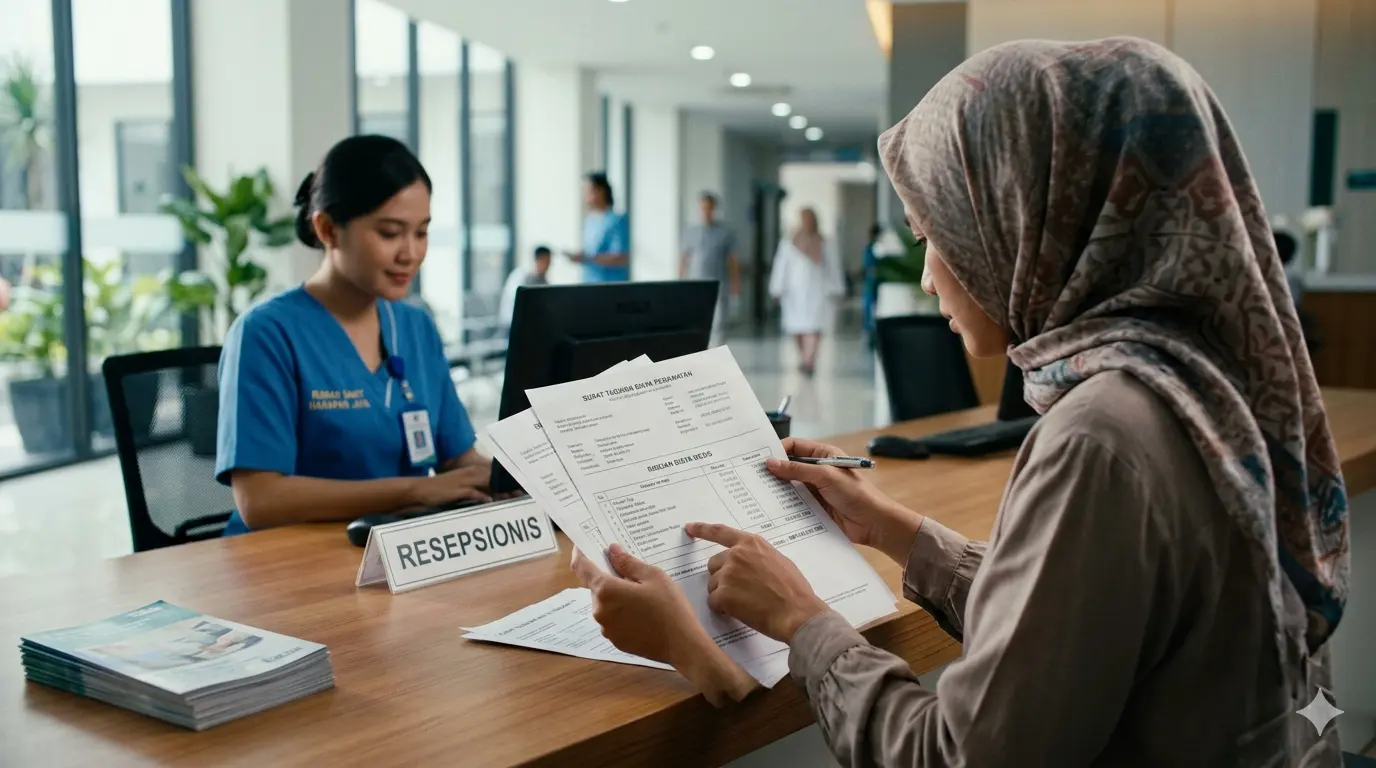
Indonesian hospitals don’t accept “I’ll pay later.” If you’re a foreigner without insurance, you pay 100% upfront, in cash or by international card, before non-emergency treatment begins. This guide breaks down what that actually costs — from a $30 doctor’s visit to a $150,000 Singapore evacuation, with real prices verified at BIMC and Siloam in 2026.
📋 Response within 2 hours — no obligation
· Costs verified directly with BIMC, Siloam & Singapore evacuation services
⚡ QUICK ANSWER
What does healthcare actually cost in Indonesia without insurance?
🟢 Routine care: $30–$500
GP consultation: $30–$60. Specialist visit: $50–$120. Basic blood test: $20–$80. Single X-ray: $30–$80. Stitches for a minor cut: $100–$300. Pharmacy prescriptions: $5–$30 for common medications.
🟡 Hospital admission: $2,000–$40,000
Standard private room: $150–$500/night. Surgery (broken leg): $10,000–$25,000. ICU per day: $800–$2,500. Multi-injury accident with surgery + 5 nights: $15,000–$35,000.
🔴 Singapore evacuation: $50,000–$150,000+
Air ambulance alone: $50,000–$100,000. Mount Elizabeth or Raffles ICU: $3,000–$8,000/day. Complex neurosurgery with weeks of rehab: $80,000+. Without insurance, families wire 50% upfront before the plane lifts off.
Want to see the breakdown by scenario? Read 10 real cost scenarios ↓
THE CONTEXT
Why Healthcare in Indonesia Works Differently for Foreigners
Most travelers arrive in Bali assuming Indonesian healthcare works similarly to home: get sick, see a doctor, pay something at the end, sort it out with insurance later. That assumption is wrong in three important ways — and each of them can turn a $1,000 problem into a $30,000 one if you’re not prepared.
1. There’s no public healthcare for foreigners
Indonesia has BPJS Kesehatan, a national health insurance system — but it’s only available to Indonesian citizens and KITAP holders (permanent residents). Tourists, digital nomads, KITAS holders and most expats are completely outside the public system. There’s no equivalent of the UK’s NHS, France’s CPAM, Australia’s Medicare, or Thailand’s “30 baht scheme.” If you walk into a public puskesmas (community clinic) without a BPJS card, you pay private rates, and you may simply be redirected to a private hospital because the puskesmas isn’t equipped to treat foreigners.
2. Hospitals require payment confirmation before non-emergency treatment
Indonesian private hospitals (BIMC, Siloam, Kasih Ibu, Mandaya) operate on a “deposit before service” model for non-emergency care. You arrive, the international patient desk evaluates your case, gives you an estimated cost, and asks for either insurance authorization (Guarantee of Payment from your insurer) or a deposit on a credit card before they admit you. Without one of those, you receive only enough stabilization to make you safe to discharge — then you’re out the door, with the actual problem unsolved.
For genuine life-threatening emergencies (the patient is unconscious, bleeding heavily, in cardiac arrest), hospitals will stabilize first and bill later — but they’re aggressive about chasing payment afterwards, including holding patients in the hospital until family wires funds. This isn’t theoretical: it happens at BIMC and Siloam every week.
3. Pricing is private hospital pricing, not subsidized
Bali’s foreigner-grade hospitals (BIMC Kuta, BIMC Nusa Dua, Siloam, Kasih Ibu) are private institutions. Their pricing reflects private healthcare standards — closer to US private rates than to European public-system rates. A standard hospital night runs $150–$500, surgery $5,000–$25,000+, ICU $800–$2,500/day. These are international-quality prices, not “third-world cheap” prices.
⚠️ The bottom line
Indonesia treats foreign patients like private US healthcare clients: insurance or deposit before service, with no government safety net. That’s why travel insurance for Indonesia isn’t optional advice — it’s the only realistic alternative to walking around with a $50,000 line of credit accessible at all times.
HOSPITAL TIERS
Cost by Hospital Tier in Indonesia
Pricing varies significantly by hospital category. The same procedure at BIMC Bali might cost 30–50% less at a smaller private hospital — but with corresponding tradeoffs in language support, medical equipment and direct billing networks. Here’s how the tiers stack up.
TIER 1 — INTERNATIONAL STANDARDBIMC Hospital (Kuta & Nusa Dua), Siloam PremiumSingapore-trained doctors, English-speaking staff, direct billing with most major international insurers, modern equipment, dedicated international patient desk. Pricing is at the top of the Indonesian market but still ~50% below comparable US private care. Standard room: $200–$500/night. Specialist consultation: $80–$150. Major surgery: $10,000–$30,000.Best for: serious accidents, surgeries, evacuation prep, complex care.TIER 2 — STANDARD PRIVATESiloam Standard, Kasih Ibu, Prima Medika, Bali RoyalGood quality private hospitals, some English support (varies by location), direct billing with several insurers, capable for routine and intermediate care. Pricing is roughly 30–40% below BIMC/Siloam Premium for comparable procedures. Standard room: $80–$200/night. Specialist consultation: $30–$80. Surgery: $4,000–$15,000.Best for: routine care, family doctor visits, less acute treatment.TIER 3 — LOCAL PRIVATESmaller local hospitals (Rumah Sakit Umum)Smaller private hospitals serving primarily local Indonesians. Limited English, varying equipment, generally no direct billing with international insurers (you pay cash, claim reimbursement later). Significantly cheaper than Tier 1/2 but you’re paying with friction and complexity. Standard room: $25–$70/night. Specialist consultation: $15–$40. Minor surgery: $500–$3,000.Best for: minor issues, very budget-conscious travelers (with caveats).TIER 4 — PUBLIC SECTOR (FOREIGNERS PAY PRIVATE RATES)Puskesmas & public hospitals (RSUD)Indonesia’s public clinic system. Minimal English, basic equipment, primarily for Indonesian citizens with BPJS. As a foreigner you’ll pay full private rates (often confused as “free” due to public hospital reputation, but that’s only for BPJS holders). Quality varies enormously between locations. Walk-in consultation: $5–$20. Basic care only — most cases get referred upward fast.Best for: very minor issues if nothing else is open. Avoid for serious cases.
PRICE LIST
Cost by Treatment Type at BIMC & Siloam (Tier 1)
These are the prices you can actually expect at the hospitals where the vast majority of foreign tourists end up. Costs are 2026 averages, USD equivalent. Specific prices vary slightly between BIMC Kuta, BIMC Nusa Dua, and Siloam Denpasar but the ranges below are representative.
Outpatient & consultations
| Service | BIMC / Siloam Premium | Tier 2 hospitals |
|---|---|---|
| GP consultation | $50–$80 | $25–$50 |
| Specialist consultation | $80–$150 | $40–$80 |
| Emergency room visit (basic) | $150–$400 | $80–$200 |
| Blood test (full panel) | $50–$150 | $25–$80 |
| X-ray (single area) | $40–$100 | $20–$60 |
| CT scan | $300–$700 | $200–$450 |
| MRI scan | $500–$1,200 | $350–$800 |
| Stitches (minor cut) | $150–$400 | $80–$200 |
| Pharmacy (common prescription) | $10–$50 | $5–$25 |
Hospital admission & rooms
| Service | BIMC / Siloam Premium | Tier 2 hospitals |
|---|---|---|
| Standard private room (1 night) | $200–$500 | $80–$200 |
| VIP/executive room (1 night) | $400–$900 | $150–$400 |
| High-care unit (1 day) | $500–$1,200 | $300–$700 |
| ICU (1 day) | $1,200–$2,500 | $700–$1,500 |
| Operating room (per hour) | $800–$2,000 | $400–$1,200 |
Surgery & specialized care
| Procedure | Total package (BIMC / Siloam) |
|---|---|
| Appendectomy (appendix removal) | $3,500–$8,000 |
| Tibia fracture surgery + 5 nights | $10,000–$25,000 |
| Wrist fracture surgery + 2 nights | $4,000–$10,000 |
| Concussion observation (2 nights) | $1,500–$4,000 |
| Dengue fever treatment (4–6 nights) | $2,500–$6,000 |
| Severe motorbike trauma (multiple injuries, ICU) | $15,000–$40,000+ |
| Decompression sickness + hyperbaric chamber | $5,000–$15,000 |
Prices verified directly with BIMC Hospital and Siloam international patient desks (2026). Final invoices vary based on complications, medication choices, and length of stay.
REAL TOURIST SCENARIOS
10 Real Cost Scenarios From Bali
These scenarios play out at BIMC and Siloam every single week. Each amount is what the patient (or their insurer) actually paid in 2026.
SCENARIO 1 — $80–$200🌶️ Bali belly (food poisoning)GP visit at BIMC Kuta, IV fluids, antibiotics, anti-nausea medication. 2-hour stay, walk out same day. Recovery: 2–3 days. The most common foreigner medical visit in Bali — affects an estimated 30–40% of tourists at some point.SCENARIO 2 — $300–$1,500🩹 Reef cuts requiring stitchesSurfing accident at Uluwatu, deep gash on foot from coral. ER visit at BIMC Nusa Dua, cleaning, stitches, tetanus booster, antibiotics. Recovery: 1–2 weeks. Reef infections in tropical environments are aggressive — infection management adds cost.SCENARIO 3 — $2,500–$6,000🦟 Dengue fever (full hospitalization)Severe dengue fever during rainy season requires hospital admission, 4–6 nights with IV fluids, daily blood tests for platelet count, antiviral support. BIMC Bali sees hundreds of dengue cases per year. Recovery: 2–3 weeks. Indonesia has dengue year-round but cases peak November–April.SCENARIO 4 — $4,000–$10,000🤲 Wrist fracture (scooter low-side)Wet road, low-side fall, hand outstretched, distal radius fracture. Surgery with internal fixation at BIMC Kuta, 2 nights inpatient, X-rays, post-op consultation, physio referral. Recovery: 6–8 weeks. The single most common surgical case among Bali tourists.SCENARIO 5 — $10,000–$25,000🦵 Tibia fracture (motorbike accident)Open or closed tibia fracture with internal fixation surgery, 4–6 nights inpatient at BIMC, anesthesia, multiple X-rays, follow-up imaging, prescription medications. Recovery: 4–6 months. The most common “expensive” Bali scooter outcome.SCENARIO 6 — $5,000–$15,000🤿 Decompression sickness (diving accident)DCS from Komodo or Nusa Penida diving, evacuation to hyperbaric chamber facility (Sanglah Hospital Denpasar has Indonesia’s main facility), multiple recompression treatments, observation, follow-up. Recovery: weeks to months depending on severity. Standard travel insurance excludes diving — DAN Europe or Genki with diving add-on cover this.SCENARIO 7 — $15,000–$40,000🚨 Multi-injury motorbike traumaMultiple fractures, soft tissue trauma, suspected internal injuries, possible concussion. ICU admission, multiple surgeries, 7–14 days at BIMC. Senior surgical team required. Recovery: 4–8 months. Without insurance, you’ll be asked to wire deposits before non-emergency surgeries can begin.SCENARIO 8 — $20,000–$60,000🧠 Head trauma + neurosurgery (Bali)Concussion progressing to subdural hematoma, neurosurgery at BIMC if surgical team available (some cases get evacuated to Singapore instead). Prolonged ICU, possible long-term cognitive impacts. Recovery: months. Helmet status is critical to insurance outcome.SCENARIO 9 — $50,000–$150,000✈️ Singapore evacuation + surgerySevere trauma requiring Mount Elizabeth or Raffles Hospital, Singapore. Air ambulance: $50K–$100K. ICU at Mount Elizabeth: $5K–$8K/day. Complex neurosurgery: $30K–$60K. Total package easily exceeds $100K. Without insurance, families wire 50% upfront before lift-off.SCENARIO 10 — $5,000–$20,000+💔 Repatriation of remainsIf the worst happens, repatriation of remains to home country involves embalming, documentation (death certificate, repatriation certificate, embassy paperwork), special transport casket, customs clearance, and air freight. Comprehensive travel insurance includes this — without it, families typically face $10K–$20K of additional costs on top of grief.
📊 The pattern that emerges: A single moderate medical event in Bali costs $5,000–$25,000. A serious event costs $30,000+. An evacuation event costs $80,000+. By contrast, comprehensive travel insurance with proper coverage costs from about $2.25/day–$3 per day. The premium pays for itself 1,000x on a single moderate claim.
EVACUATION COSTS
Singapore Evacuation: The Real Numbers
Bali doesn’t have world-class trauma neurosurgery, complex spinal surgery, specialized burn units, or organ transplant capability. For severe cases, evacuation to Singapore is the standard escalation. Mount Elizabeth Hospital and Raffles Hospital are both world-class trauma centers, 3–4 hours away by air ambulance. Here’s what each component actually costs.
Air ambulance Bali → Singapore
✈️ Standard medevac flight$50,000–$80,000. Includes Learjet or similar with medical configuration, 1 pilot + 1 doctor + 1 nurse, basic emergency equipment. Covers stable patients needing higher-level care.🚑 ICU-grade medevac$80,000–$120,000. Larger aircraft with full ICU configuration, 2-doctor team, ventilator, advanced monitors, intubation capability. Required for unstable patients.🏥 Commercial flight + medical escort$8,000–$20,000. For stable patients who can fly commercial with a doctor or nurse escort. Specialized seating arrangement, oxygen if needed. Significantly cheaper if medically appropriate.
Singapore hospital costs
Singapore healthcare is among the most expensive in Southeast Asia — comparable to or higher than US private rates. Mount Elizabeth Hospital, Raffles Hospital, and Gleneagles are the top-tier facilities for international patients.
🛏️ Standard private roomSGD $400–$800/night ($300–$600 USD). Plus food, basic nursing, room services.🏥 ICU per daySGD $4,000–$10,000/day ($3,000–$7,500 USD). Includes specialist team, full monitoring, ventilator if needed, ICU nursing ratios.🧠 Complex neurosurgerySGD $30,000–$80,000+ ($22,000–$60,000 USD). Surgeon fees, anesthesia, OR time, post-op ICU. Severity-dependent.🦵 Major orthopedic surgerySGD $25,000–$60,000 ($18,000–$45,000 USD). Multi-day inpatient, rehab planning, follow-up.
Total evacuation event packages
Putting it all together, a typical Bali → Singapore evacuation event costs:
- Best case (commercial flight + minor surgery in Singapore): $25,000–$50,000
- Standard case (medevac + 5 days ICU + surgery): $80,000–$120,000
- Severe case (full medevac + 2 weeks ICU + neurosurgery + rehab): $150,000–$300,000+
⚠️ Without evacuation insurance
If your insurance doesn’t include evacuation and you need it, you have three options: pay $80K–$200K+ upfront yourself; have family wire the funds within hours; or accept the local treatment limits. None of these is a position you want to be in. Make sure your travel insurance includes evacuation coverage of at least $100,000–$1,000,000.
PAYMENT METHODS
How Indonesian Hospitals Want to Be Paid
Understanding the payment landscape before something happens saves a lot of stress. Here’s how the system actually works at BIMC, Siloam, and Tier 2 hospitals across Indonesia.
What hospitals accept
✅ Insurance Guarantee of PaymentThe preferred method. Your insurer issues a Guarantee of Payment (GoP) directly to the hospital, the hospital bills the insurer, you pay only your deductible. Direct billing is available with most major insurers at BIMC, Siloam, and Kasih Ibu.💳 International credit card (Visa, Mastercard, AmEx)Accepted at all Tier 1 hospitals. Note that high-value transactions ($5,000+) often trigger fraud alerts on home country cards — call your bank in advance to authorize. Some hospitals charge a 2–3% surcharge for credit card payments.🏦 International wire transferUsed for large amounts, especially Singapore evacuation deposits. Wires from US/EU take 1–3 business days, but hospitals will hold a bed for confirmed wires. Bank fees: $20–$50 per transfer plus exchange spread.💵 Cash (IDR or USD)Accepted for smaller amounts at all hospitals. ATM withdrawal limits in Indonesia are typically 2–3 million IDR ($130–$200) per transaction, with daily limits of 5–10 million IDR ($330–$650). For anything substantial, you’ll need wire transfers or cards.
The deposit system
Indonesian private hospitals operate on a “deposit before non-emergency treatment” model. The international patient desk evaluates your case and asks for a deposit covering estimated costs:
- Outpatient consultation: $100–$500 deposit
- Emergency room admission: $500–$2,000 deposit
- Hospital admission (no surgery): $2,000–$8,000 deposit
- Surgery + inpatient stay: $8,000–$30,000 deposit
- Singapore evacuation: $50,000+ wire transfer before lift-off
The deposit is reconciled against actual costs at discharge. If costs were less than deposit, you get a refund (which can take 2–8 weeks for international card refunds). If costs exceeded deposit, you pay the difference before discharge. With insurance, the GoP replaces the deposit — you don’t tie up your own funds.
WITHOUT INSURANCE
What Actually Happens Without Insurance
Most travelers underestimate how aggressive the payment-first system actually is. Here’s the unvarnished sequence of events when an uninsured tourist arrives at BIMC after a serious incident.
MINUTE 0–30Triage and emergency stabilizationIf you’re in life-threatening condition, the ER will stabilize you regardless of payment status. This is required by Indonesian medical ethics and they do follow it. You’ll be triaged, stabilized, given pain relief, and basic diagnostics will be performed. Cost: $300–$1,500 added to your eventual bill.MINUTE 30–120Financial conversation beginsOnce you’re stable, the international patient desk arrives. They explain treatment options, costs, and ask how you’ll pay. They’ll request to see insurance documents (none?) or a credit card. If your case requires surgery or admission, they’ll quote a deposit amount: typically $5,000–$30,000 depending on severity.HOUR 2–6The “wire family” conversationIf your credit card limit doesn’t cover the deposit (most people’s cards have $5K–$15K limits, not $30K), the hospital asks you to call family. Your spouse, parent, or close friend wires the deposit from your home country. Wires from US/EU arrive in 4–48 hours depending on banks. Until the wire confirms, only stabilization continues — no surgeries, no admissions to a private room, no specialist consults.DAY 1–NTreatment + cost monitoringOnce deposit clears, treatment proceeds normally. The hospital bills run a daily tally: room ($300–$500/day), medications, tests, consults. Every few days the international patient desk gives you an updated bill. If costs approach deposit, they ask for a “top-up.” If you can’t top up, you get discharged early — even if it’s medically suboptimal.DISCHARGEFinal invoice + reconciliationFinal bill is reconciled against deposits paid. If you owe more, you pay before discharge — either by topping up cash/card, or by another wire transfer. The hospital can hold your passport (technically not legal, but happens) until payment is confirmed. For severe cases, “departure consents” may require formal hospital sign-off that all bills are settled.
⚠️ The reality without insurance, summarized
A serious accident without insurance means: $10K–$50K out of pocket for treatment; family wire transfers under stress, sometimes within hours; treatment that could be suboptimal if deposits don’t keep up with costs; weeks or months of credit card debt at high interest rates; no flexibility to extend stay or upgrade care if needed. It’s not a financial inconvenience — it’s a financial emergency.
WITH INSURANCE
What Happens With Proper Insurance
The same incident with proper insurance plays out completely differently. The medical care is the same; the financial experience is the difference between a stressful trip and a financially ruinous one.
MINUTE 0–30Same triage + ER stabilizationIdentical medical response. Stabilized, triaged, basic diagnostics. Cost: same — but won’t be your problem.MINUTE 30–60Insurer authorization arrivesYou called your insurance 24/7 hotline (Step 3 of any incident protocol — see our motorbike accident guide). The insurer issues a Guarantee of Payment to BIMC within 1–2 hours, sometimes immediately for clearly covered cases. The deposit conversation is replaced by GoP confirmation.HOUR 2–6Treatment proceeds without financial stressNo wire transfer to chase, no family stress, no calls home in distress. You focus on recovery. The hospital bills the insurer directly, you pay only your deductible (typically $50–$250).DAY 1–NTreatment + recoveryTreatment proceeds at the medically appropriate pace, not the financial one. You stay as long as needed for proper recovery, get appropriate consultations, no early discharge. Insurance covers extension benefits if you need to stay in Bali to recover before flying home.DISCHARGEWalk out with deductible onlyYou pay your deductible (often $0–$250), settle any non-covered items (private room upgrade, premium meals, etc.), and walk out. The insurer reconciles the rest with the hospital. Your only ongoing task: keep documents for any reimbursement claims.
✅ The reality with insurance, summarized
A serious accident with proper insurance means: $50–$250 deductible total out-of-pocket; no family wire transfers; medically appropriate care, not financially constrained; extension benefits for trip changes; full attention on recovery, not on bills. It’s the difference between a trip that goes wrong and a trip that’s destroyed.
THE MATH
Insurance Cost vs Out-of-pocket Risk
Travelers sometimes try to do the math: “What’s the chance I’ll need it? Maybe I should self-insure.” The numbers below explain why that math doesn’t work in Indonesia.
What insurance costs
⭐ BEST FOR BALI SCOOTER COVERAGEGenki Traveler — from €52/month (varies by age)€1,000,000 medical limit, includes evacuation, covers 125cc scooter without requiring a motorcycle license — uniquely valuable for Bali tourists. ~€1.70/day. For a 2-week Bali trip: about €26 total.FOR LICENSED RIDERS & NOMADSSafetyWing Complete — from $177.50/month$1.5M medical limit, monthly subscription, cancel anytime, includes evacuation up to $100K. Requires valid motorcycle license + IDP for scooter coverage. ~$5.50/day.FOR FAMILIES & SENIORSIMG Patriot Travel — $2.50–$8/dayUp to age 89, family-friendly, strong evacuation cover. Daily pricing scales with age and trip length. Requires valid motorcycle license + IDP for scooter coverage.
What you’re protecting against
| Event | Out-of-pocket cost | Premium pays itself in |
|---|---|---|
| ER visit + stitches | $300–$1,500 | ~10–60x premium |
| Dengue hospitalization | $2,500–$6,000 | ~100–250x premium |
| Wrist fracture surgery | $4,000–$10,000 | ~150–400x premium |
| Tibia fracture surgery | $10,000–$25,000 | ~400–1000x premium |
| Multi-injury trauma + ICU | $15,000–$40,000 | ~600–1600x premium |
| Singapore evacuation event | $80,000–$200,000+ | ~3000–8000x premium |
The math doesn’t favor self-insurance even at low probability. A single moderate event repays the premium hundreds of times over. And the events aren’t actually low probability — Bali sees thousands of foreign tourists hospitalized per year, and the most common scenario (scooter accident with surgery) costs $10K–$25K.
FAQ
Healthcare Cost Indonesia: Frequently Asked Questions
Is healthcare in Indonesia really expensive?For foreigners, yes — at international-standard hospitals. BIMC and Siloam pricing is roughly 50–70% of comparable US private rates, but still much higher than European public-system rates. A standard hospital night runs $150–$500, surgery $5,000–$25,000+. The “Asia is cheap” assumption doesn’t apply at the hospitals where tourists actually get treated.Will Indonesian hospitals treat me if I can’t pay?For genuine life-threatening emergencies, yes — they’ll stabilize you regardless. For non-emergency or ongoing treatment, no — payment confirmation (insurance authorization or deposit) is required first. Without payment, you receive only enough stabilization to be safely discharged, then you’re out the door with the actual problem unsolved.Can I just use a cheaper local hospital?For minor cases, yes — Tier 2 hospitals (Siloam Standard, Kasih Ibu, Bali Royal) charge 30–40% less than BIMC for comparable care. For serious cases (surgery, ICU, complex trauma), you should be at BIMC or a Tier 1 facility — better equipment, English-speaking staff, direct billing with international insurers. The cost difference is dwarfed by the quality and convenience difference.How much should travel insurance for Indonesia cost?Comprehensive travel insurance for Indonesia ranges from about $2.25/day–$8 per day depending on age, coverage level, and provider. Genki Traveler is around €1.70/day with €1,000,000 medical limit and 125cc scooter coverage with conditions — check the policy wording. SafetyWing Complete is around $5.50/day. IMG Patriot scales with age. For a 2-week Bali trip, total premium is typically $25–$100 — about the cost of one nice dinner.Is BPJS Kesehatan an option for foreigners?Only for Indonesian citizens and KITAP (permanent resident) holders. KITAS holders, digital nomads, tourists and most expats are excluded. Some Indonesian employers contribute to BPJS for their foreign employees, but as an individual you can’t enroll without permanent residency. International private insurance is the only realistic option.What if I have a chronic condition?Pre-existing conditions are typically excluded from travel insurance unless declared and underwritten. For complex pre-existing conditions, IMG Global with pre-existing condition riders is the most flexible option. The premium is higher but coverage is comprehensive. Without coverage for chronic conditions, episodes of acute worsening are paid 100% out of pocket.Are credit cards accepted at Indonesian hospitals?Yes at all Tier 1 hospitals (BIMC, Siloam Premium). Visa, Mastercard, AmEx all accepted. Note: high-value transactions ($5,000+) often trigger fraud alerts on home country cards — call your bank in advance to authorize. Some hospitals charge 2–3% surcharge for credit card payments. Daily limits and credit limits matter — most personal cards max out around $10K–$15K, which doesn’t cover major surgery deposits.What if I can’t pay the bill at discharge?The hospital will not release you until payment is settled or alternative arrangements made. Options: top up the deposit via wire transfer; arrange a payment plan (rare, but possible for legitimate hardship); reach out to your embassy for emergency assistance (limited but exists); have family wire funds. Worst case: you remain at the hospital until funds arrive, which can take days. This is why insurance solves the problem at the door rather than at discharge.Does Indonesia have public emergency services?Yes, Indonesia has emergency services: 118 (ambulance), 113 (fire), 110 (police). Response times in Bali tourist areas are 15–30 minutes typically — slower than Western standards. For accidents in tourist areas, calling a Grab/Gojek to BIMC is often faster than waiting for an ambulance. The ambulance service itself is mostly free for emergencies, but the hospital you arrive at applies the standard payment-first model.Can I negotiate hospital bills in Indonesia?Limited room. Tier 1 hospitals (BIMC, Siloam Premium) have published rates and don’t negotiate, especially with foreign patients. Tier 2 and Tier 3 hospitals have more flexibility but the savings rarely justify the quality tradeoff for serious cases. Where negotiation does happen: private room upgrades, premium meals, optional services. Core medical pricing is fixed.
$25,000 Hospital Bill, or from €52/month Insurance?
A single Bali medical event costs more than a year of insurance premiums. The math has been the same for 20 years and isn’t going to change.
Response within 2 hours · No spam, ever
📚 Sources & Methodology
Every cost figure on this page is verified directly with Indonesian hospital international patient desks, Singapore evacuation services, and insurance providers. Prices are 2026 averages; specific cases vary based on complications, room choice, and length of stay. Last full review: April 2026.
Hospital pricing sources
- BIMC Hospital — Kuta & Nusa Dua, Bali (international patient desk pricing 2026)
- Siloam Hospitals — Bali (Denpasar) and nationwide (published 2026 pricing)
- Mount Elizabeth Hospital — Singapore (international patient services pricing)
- Raffles Hospital — Singapore (international patient pricing)
Public health & statistics
- World Health Organization — Global Health Observatory (Indonesia road safety data)
- Indonesia Ministry of Tourism & Creative Economy (Kemenparekraf) — Bali tourist arrival data
- BPJS Kesehatan — public health insurance eligibility framework (Indonesian citizens and KITAP)
- Indonesian Ministry of Health — private hospital regulation and licensing framework
Insurance providers reviewed
- Genki (Traveler) — pricing and coverage verified directly
- SafetyWing (Essential & Complete) — pricing and direct billing networks verified
- IMG Global — Patriot Travel & Global Medical pricing verified
How we verify costs
Hospital pricing is cross-verified through direct conversations with international patient desks, public price lists where available, and patient experience reports from expat communities in Bali. Insurance pricing is verified directly from each provider’s official quoting tools. Where information shifts between annual reviews, we re-verify quarterly. We document weaknesses alongside strengths for every plan we cover. Read the full affiliate disclosure.